Introduction to AI, Machine Learning & Data Science: A Beginner Career Guide for 2026 (Updated June 2026) (Updated June 2026)
NASSCOM and Deloitte project India will need 1.25 million AI professionals by 2027 — and at the same time, TCS announced 12,000 layoffs in July 2025, specifically citing automation of routine IT roles. That is not a contradiction. What is happening is a structural shift: companies are replacing people who do repetitive tasks and urgently hiring people who can build, deploy, and manage AI systems. Here's the thing — you do not need a PhD to enter this field. The most in-demand AI and ML roles in 2026 are filled by engineers who understand the fundamentals, can write Python, can use standard frameworks, and can solve real business problems with data. This guide cuts through the jargon and gives you an honest picture of what AI, ML, and Data Science actually mean, how they are different, which skills get you hired, and what the salary bands look like in Pune and across India.
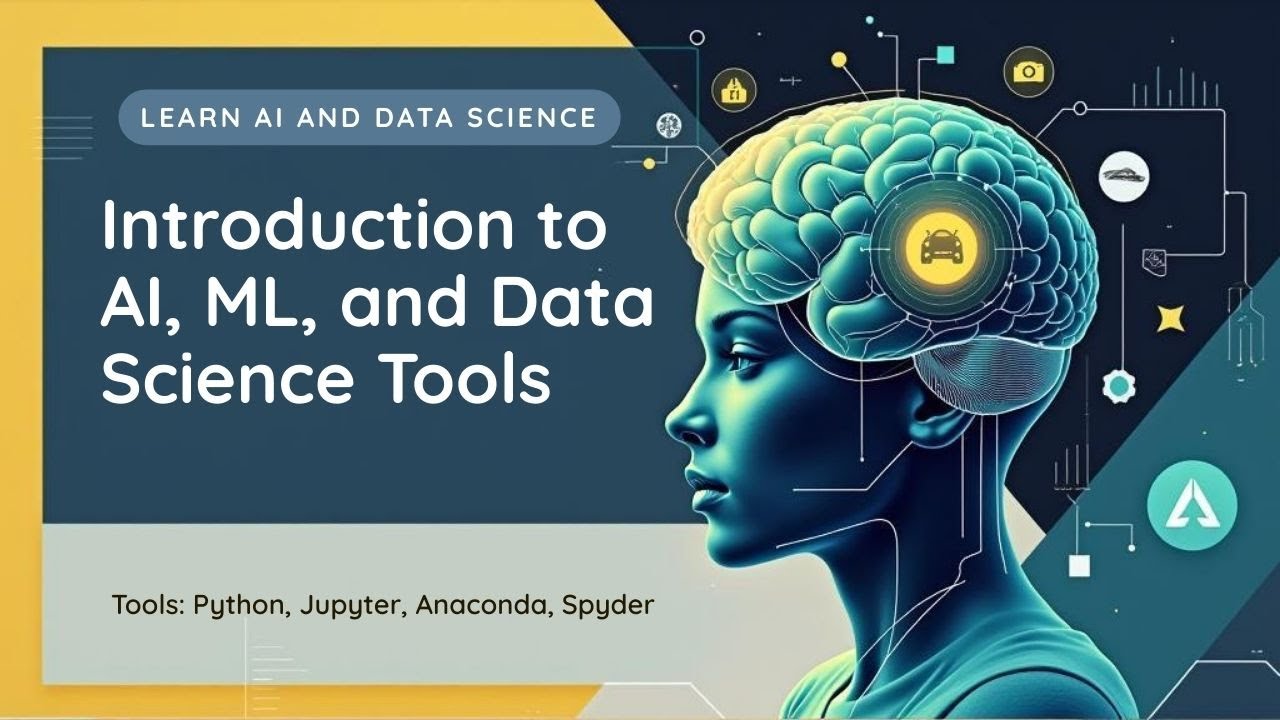
- AI is the broad field of making machines intelligent; Machine Learning is a subset using data and algorithms; Data Science focuses on extracting insights from data
- Python is the primary language across all three fields — libraries like NumPy, Pandas, Scikit-learn, TensorFlow, and PyTorch form the standard toolkit
- The most hired roles in 2026: Data Analyst, ML Engineer, Data Engineer, AI Product Manager — each with distinct skill requirements
- Entry salaries for AI/ML freshers in Pune: ₹5–8 LPA; senior ML engineers at 4+ years: ₹18–35 LPA (AmbitionBox/Glassdoor 2025–2026)
- Maharashtra CMYKPY scheme provides ₹6,000–₹10,000/month stipend during approved AI/ML training for eligible candidates
AI vs Machine Learning vs Data Science: Understanding the Actual Differences
Artificial Intelligence is the umbrella term for any technique that enables machines to mimic human intelligence — reasoning, perception, language understanding, decision making. Machine Learning is a specific approach within AI where systems learn patterns from data without being explicitly programmed for every rule — you feed the system thousands of labelled examples (supervised learning) or raw unlabelled data (unsupervised learning), and the algorithm builds a model that generalizes to new inputs. Deep Learning is a subset of ML that uses neural networks with many layers — it is the technology behind image recognition, speech processing, and large language models. Data Science is a broader discipline that combines statistics, programming, domain knowledge, and visualization to extract actionable insights from data — it overlaps heavily with ML but also includes data collection, cleaning, exploration (EDA), and business communication of findings. The practical way to think about the differences: a Data Scientist asks and answers questions from data; an ML Engineer builds and deploys the predictive models; a Data Engineer builds the pipelines that move and store the data; an AI Researcher invents new algorithms. All four roles are in demand, and all four start from the same foundational skills.
The Core Skill Stack: Python, Statistics, and the Libraries That Matter
Python is the language of AI and data science — not Java, not R (though R has its niche in academia), not JavaScript. Python's dominance comes from its readable syntax, massive library ecosystem, and the fact that every major ML framework supports it. The core stack every AI/ML beginner needs: NumPy for numerical computing and array operations; Pandas for data manipulation and analysis (think Excel but programmatic and infinitely scalable); Matplotlib and Seaborn for data visualization; Scikit-learn for classical ML algorithms (regression, classification, clustering, dimensionality reduction) with a beautifully consistent API; TensorFlow or PyTorch for deep learning (PyTorch has become the preference for research; TensorFlow/Keras for production deployment). Statistics is the other non-negotiable: probability, distributions, hypothesis testing, correlation vs causation, and overfitting vs underfitting are concepts you will use every day. The good news is that you do not need to master all of these before getting started — a solid foundation in Python basics, Pandas, and Scikit-learn is enough to land your first Data Analyst or junior ML role.
Types of Machine Learning: Supervised, Unsupervised, and Reinforcement
Machine learning algorithms are typically categorized by the type of feedback they use during training. Supervised Learning uses labelled data — input-output pairs — to train a model to predict outputs for new inputs. Classification (spam detection, disease diagnosis, fraud detection) and regression (predicting house prices, salary, demand) are supervised tasks. Algorithms include linear regression, logistic regression, decision trees, random forests, gradient boosting (XGBoost, LightGBM), and SVMs. Unsupervised Learning finds structure in unlabelled data — clustering (K-Means, DBSCAN for grouping similar customers), dimensionality reduction (PCA for simplifying high-dimensional data), and anomaly detection. Reinforcement Learning trains an agent through reward and punishment signals — the technology behind AlphaGo, game-playing AIs, and increasingly industrial robotics and autonomous vehicles. For your first job in data science, supervised learning is where 80% of real business problems live. Most classification and regression challenges at Infosys, TCS Analytics, and KPIT's data teams use gradient boosting or neural networks on structured tabular data — mastering these before exotic architectures is the pragmatic path.
Career Paths in AI/ML/Data Science: Which Role Is Right for You?
The career path you choose matters because the skill stacks diverge significantly at the mid-level. Data Analyst: focuses on SQL, Pandas, visualization (Power BI, Tableau), statistical analysis, and storytelling with data — entry salary ₹4–7 LPA, strong demand at every company with any data at all. Machine Learning Engineer: builds and deploys predictive models — strong Python, ML algorithms, model evaluation, basic MLOps (MLflow, Docker, API deployment) — entry ₹5.5–9 LPA, very strong demand at tech companies. Data Engineer: builds data pipelines, manages warehouses (BigQuery, Snowflake, Redshift), orchestrates workflows (Apache Airflow) — entry ₹6–10 LPA, extreme demand because organizations are drowning in data with no infrastructure to use it. AI/ML Research Engineer: implements novel architectures, requires deep math (linear algebra, calculus, probability) — entry ₹8–14 LPA, requires strong academic background or portfolio. Choose based on your strengths: love working with stakeholders and storytelling? Data Analyst. Love mathematics and algorithms? ML Research. Love building systems and infrastructure? Data Engineer.
| Role | Core Skills | Entry Salary Pune 2026 | Senior Salary (5+ yrs) |
|---|---|---|---|
| Data Analyst | SQL, Pandas, Power BI/Tableau, Statistics | ₹4–7 LPA | ₹12–18 LPA |
| ML Engineer | Python, Scikit-learn, TensorFlow/PyTorch, MLOps | ₹5.5–9 LPA | ₹22–40 LPA |
| Data Engineer | Python, SQL, Spark, Airflow, Cloud (AWS/GCP) | ₹6–10 LPA | ₹20–35 LPA |
| AI Research Engineer | Deep learning, Linear Algebra, Python, CUDA | ₹8–14 LPA | ₹25–45 LPA |
| AI Product Manager | Product management, ML fundamentals, stakeholder mgmt | ₹10–16 LPA | ₹30–55 LPA |
Salary Reality Check: What AI and Data Science Engineers Earn in India 2026
Based on AmbitionBox, Glassdoor, and 6figr data (June 2026): Data Analysts at fresher level earn ₹4–7 LPA in Pune at IT companies; ₹7–12 LPA at 2–3 years. Machine Learning Engineers at 0–2 years earn ₹5.5–9 LPA at Infosys, TCS, and mid-size product companies; ₹12–20 LPA at 3–5 years. Senior ML Engineers at 5+ years with production deployment experience earn ₹22–40 LPA. Data Engineers are consistently among the highest-paid data roles: ₹8–14 LPA at 2–4 years, ₹20–35 LPA at senior level. AI Research Scientists at companies like TCS Research, Infosys Nia, and KPIT AI Labs earn ₹15–28 LPA for 3–5 years. The NASSCOM-Deloitte projection of 1.25 million AI professionals needed by 2027 means supply is significantly below demand for the next 3–4 years — this is a genuine window for career-changers and freshers to enter the field at a higher salary point than equivalent experience levels in traditional IT.
Who Is Hiring AI and ML Engineers in Pune and Maharashtra Right Now
Companies actively hiring AI, ML, and Data Science professionals in Pune (June 2026): Infosys, Electronics City Hinjewadi Phase 2 Pune — AI/ML engineers, data scientists for Infosys Nia and client delivery; TCS, Rajiv Gandhi IT Park Hinjewadi — data analysts, ML engineers (actively rebuilding AI capability); KPIT Technologies, Hinjewadi Phase 1 Plot IT-3/4 — AI in automotive, ML engineers for embedded-AI and ADAS data processing; Persistent Systems, Senapati Bapat Road Pune — data engineers, ML engineers for product and services; Syntel, Hinjewadi — data analytics and AI delivery; Cyient, Hadapsar MIDC — AI for engineering analytics; Wipro, Hinjewadi — data science and AI delivery centers. For freshers in Sambhajinagar: Hyosung Corporation India, AURIC Bidkin — digital manufacturing analytics; Ather Energy, Bidkin Industrial Area — ML for EV telemetry and predictive maintenance. Call +91 7039169629 or WhatsApp 7774002496 to join our AI Powered Application Development workshop.
Under Maharashtra's Chief Minister Yuva Karya Prashikshan Yojana (CMYKPY), eligible candidates receive a monthly stipend of ₹6,000–₹10,000 during approved technical training. ABC Trainings' AI Powered Application Development workshop is an enrolled CMYKPY program — call +91 7039169629 or WhatsApp 7774002496 to check your eligibility and join the next batch.Get the IT Brochure + Fees + Batch Dates on WhatsApp
Free 1:1 counselling. Placement track record. CMYKPY/PMKVY eligibility check.
💬 Get Brochure on WhatsApp📞 Call 7039169629About the author: Amit Kulkarni. 8 yrs leading IT training at ABC Trainings, ex-Infosys.
Visit Our Centers
- Wagholi (Pune): 1st Floor, Laxmi Datta Arcade, Pune-Ahilyanagar Highway. Call 7039169629
- Hadapsar (Pune HQ): 1st Floor, Shree Tower, opp. Vaibhav Theater, Magarpatta. Call 7039169629
- Cidco (Chh. Sambhajinagar): Kalpana Plaza, opp. Eiffel Tower, N-1 Cidco. Call 7039169629
- Osmanpura (Chh. Sambhajinagar): S.S.C Board to Peer Bazar Road, near Jama Masjid. Call 7039169629
- Sangli: Shubham Emphoria, 1st Floor, Above US Polo Assn., Sangli-Miraj Rd, Vishrambag. Weekend batches available. Call 7039169629
FAQs
What is the difference between Artificial Intelligence, Machine Learning and Data Science?
Artificial Intelligence is the broad field of creating intelligent machines. Machine Learning is a specific approach within AI where algorithms learn patterns from data rather than following explicitly programmed rules. Data Science is a broader discipline that uses ML, statistics, programming, and domain expertise to extract business insights from data. Think of it as nesting: all ML is AI; not all AI is ML. Data Science overlaps with both but also includes data engineering, visualization, and stakeholder communication — skills that pure ML engineering does not always require.
Do I need a mathematics or statistics background to get into AI/ML?
You do not need an advanced mathematics degree to start in data science or ML engineering. You need to be comfortable with: basic probability and statistics (mean, variance, distributions, hypothesis testing), linear algebra concepts (vectors, matrices — mostly intuition, not proof), and basic calculus intuition (what a gradient is, why it matters for optimization). These are learnable in 4–6 weeks with dedicated effort. Most working ML engineers are not mathematicians — they understand the core intuitions, know how to evaluate models, and know when their results do not make sense.
Which programming language should I learn first for data science — Python or R?
Learn Python first — it is the industry standard for data science, machine learning, and AI engineering worldwide. Python's library ecosystem (Pandas, NumPy, Scikit-learn, TensorFlow, PyTorch) is unmatched, and every major ML platform and framework supports Python natively. R has strong footing in academia, clinical research, and some statistical niches, but the industry demand ratio is roughly 9:1 in favor of Python for data science roles. Once you are proficient in Python for data science, adding R for specific statistical workflows is straightforward.
What salary can a fresher expect in an AI or ML role in Pune in 2026?
Based on AmbitionBox and Glassdoor data (June 2026): freshers in Data Analyst roles in Pune earn ₹4–7 LPA at IT services companies and mid-size product firms. Junior ML Engineers with a relevant project portfolio and Python proficiency earn ₹5.5–9 LPA at companies like Infosys, TCS, and KPIT. Freshers with demonstrated projects on GitHub (classification, regression, NLP, or computer vision) consistently get higher offers than those with only course certificates. The NASSCOM-Deloitte projection of 1.25 million AI professionals needed by 2027 means the market is absorbing freshers faster than supply can fill it.