Ask a beginner what a dimension does in Revit and they will say it measures something. That is true, but it misses the point that separates a tidy modeller from a real BIM engineer. In Revit, a dimension can also control the model. Once you understand dimensions, constraints, locks and equality, you stop fighting your model every time the design changes — and start building models that hold their intent on their own. For students in Pune learning Revit, this is one of the most important early lessons.

Dimensions: measuring versus driving
Revit has two kinds of dimensions and the difference matters. A permanent dimension is one you place on a view; it reports the distance between references and stays on the sheet. A temporary dimension appears whenever you select an element, letting you nudge it precisely. Both can do more than report a number — when you lock them, they become rules the model must obey.
This is the mental shift: a dimension is not just an annotation, it is a potential constraint. Learn to see every dimension as something you could lock, and Revit's parametric power opens up.
The lock: turning a measurement into a rule
Place a dimension between two walls and you will see a small padlock icon. Click it closed and you have created a constraint: those two walls will now stay exactly that distance apart no matter what else you change. Move one wall and the other follows. Lock a door's distance from a corner and the door travels with the wall when the room is resized.
Used well, locks encode design intent directly into the model. A corridor that must stay 1500 mm wide, a setback that must stay constant, a shaft that must keep its size — lock those dimensions once and you never have to police them by hand again. This same discipline is what makes flexible Revit families and formulas work.
Equality (EQ): the most underused tool in Revit
Select a chain of dimensions across several elements and Revit offers an equality constraint, shown as an EQ toggle. Switch it on and Revit forces those segments to be equal. Add a column to the grid, move a partition, stretch the wall — Revit redistributes everything to keep the spacing perfectly equal. For evenly spaced columns, mullions, balusters or partitions, equality does in one click what would otherwise be endless manual adjustment. Once students see it work, they use it everywhere.
Alignment and reference planes
The Align tool pairs naturally with constraints. Align one element to another and Revit again offers a padlock: lock it, and the two stay aligned through every future edit. Inside families, the same logic runs on reference planes — you constrain geometry to reference planes, dimension and lock those planes, and link them to parameters so the family flexes correctly. Master this and you can build a window or column family that resizes cleanly instead of breaking.
Over-constraining: the error every beginner meets
Sooner or later Revit will warn you that the model is over-constrained, or refuse to let you lock one more dimension. This is not a bug; it is geometry telling you that you have given it more rules than it has freedom to obey. If a wall's position is already fixed by one locked dimension, a second locked dimension that disagrees cannot also be satisfied. The cure is simple once you understand the cause: unlock or delete one of the conflicting constraints so the model has the freedom it needs. Beginners who grasp this idea early avoid the single most common source of Revit frustration.
Why this matters on real Pune projects
On a live project — a residential tower in Wagholi, an office fit-out in Kharadi — designs change constantly. A model held together by good constraints absorbs those changes gracefully; a model with no constraints falls apart and has to be patched by hand every time. Engineers who constrain their models well are faster, make fewer errors, and produce models other team members can safely edit. That reliability is exactly what employers notice. It is also the foundation for everything more advanced, from parametric families to computational design.
How to practise it
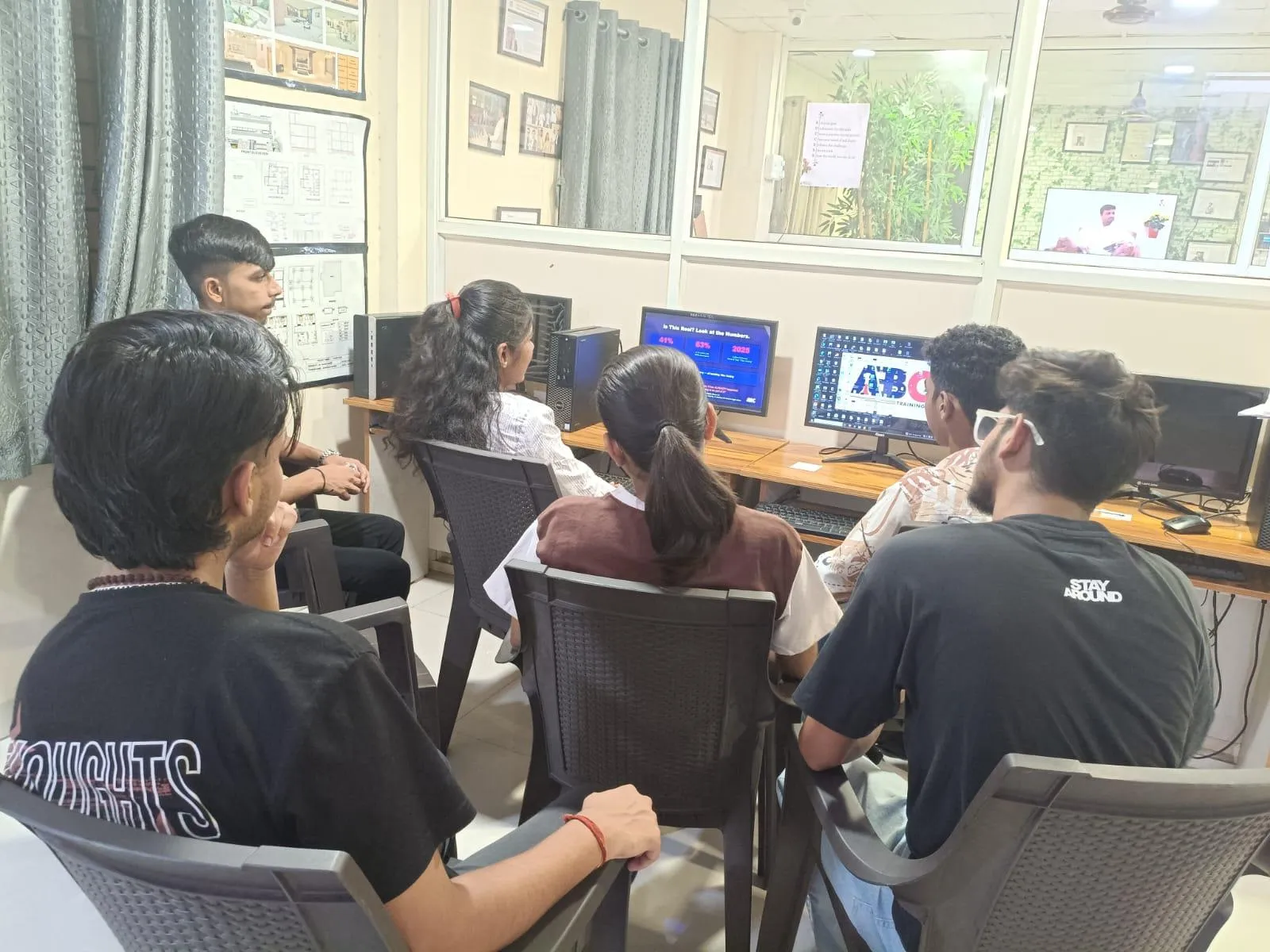
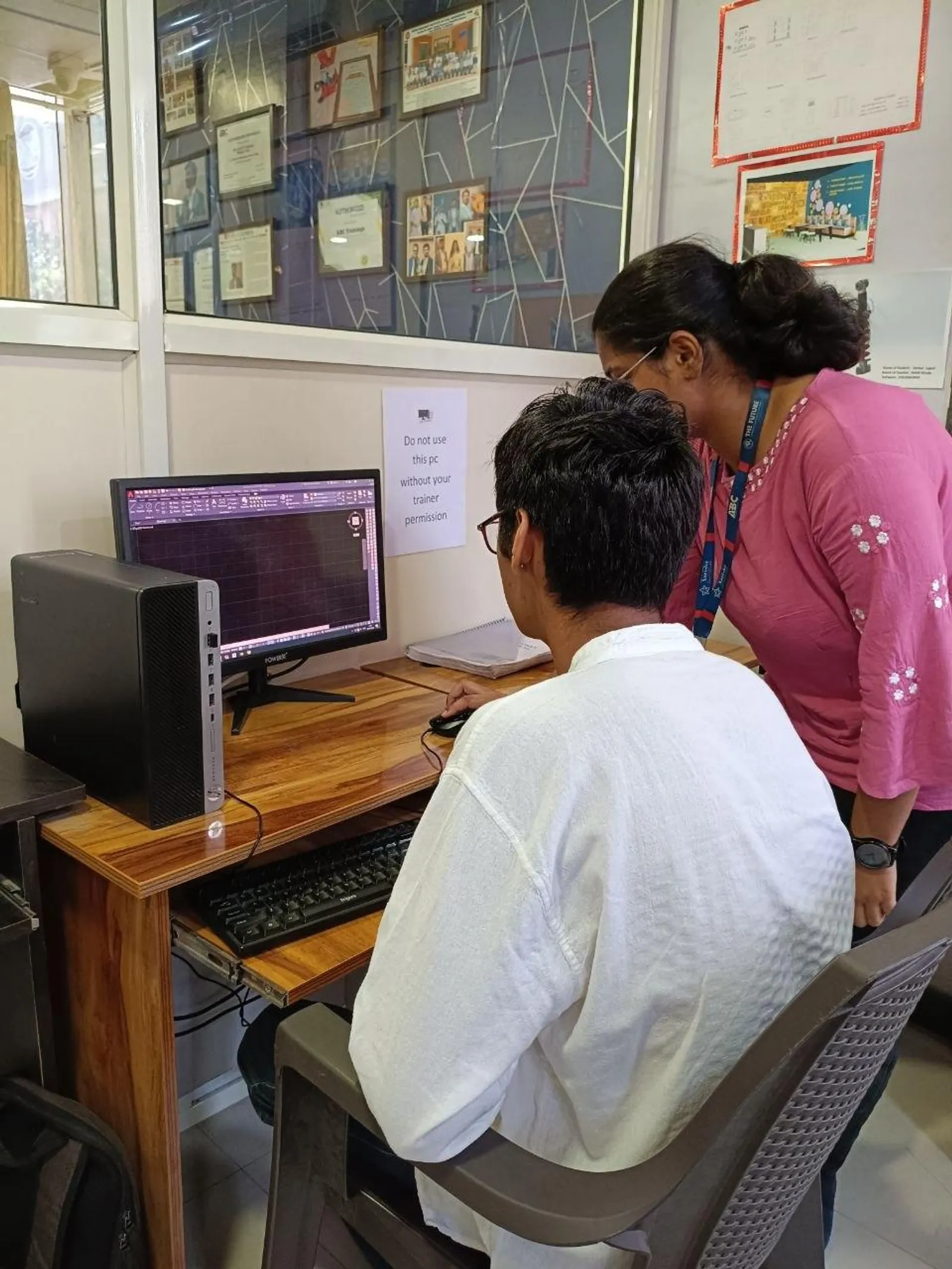
Constraints are a skill of the hands, not the head — you learn them by deliberately building a small model, locking it, then changing the design and watching what holds and what breaks. At ABC Trainings in Pune, Revit fundamentals are taught exactly this way: every student builds, constrains and then stress-tests their own model, so that dimensions, locks and equality become second nature long before they reach a real project.
Frequently asked questions
What is the difference between a dimension and a constraint in Revit?
A dimension reports a measurement. A constraint forces the model to obey a rule — for example locking a dimension so two walls always stay a fixed distance apart, or using an equality constraint to keep elements evenly spaced. Constraints turn measurements into design intent.
What does the EQ (equality) constraint do?
Equality forces a set of elements or reference planes to remain equally spaced. If you add or move elements, Revit redistributes them so the spacing stays equal automatically — perfect for evenly spaced columns, mullions or partitions.
Why does Revit warn about over-constraining?
If you lock more dimensions than the geometry has freedom for, the rules conflict and Revit cannot satisfy them all. The fix is to remove or unlock one constraint so the model has the freedom it needs. Understanding this prevents most beginner errors.
Do constraints matter outside of families?
Yes. Constraints work in the project environment too — aligning and locking walls, doors, grids and levels — not only inside the family editor. Good constraint discipline keeps an entire project model stable as it changes.
Related guides for Pune BIM engineers
Get Brochure + Fees + Batch Dates on WhatsApp
Free 1:1 counselling. Placement track record. Government-affiliated, ISO & MSME certified.
💬 WhatsApp 7774002496📞 Call 7039169629Visit Our Centers
- Wagholi (Pune): 1st Floor, Laxmi Datta Arcade, Pune-Ahilyanagar Highway, Wagholi. Call 7039169629
- Hadapsar (Pune HQ): 1st Floor, Shree Tower, opp. Vaibhav Theater, near Bloom Hotel, Magarpatta, Hadapsar. Call 7039169629
- Cidco (Chh. Sambhajinagar): Plot no 258, opp. Eiffel Tower, N-1 Cidco. Call 7039169629
- Osmanpura (Chh. Sambhajinagar): S.S.C Board to Peer Bazar Road, near Jama Masjid. Call 7039169629
- Sangli: 1st Floor, above US Polo Store, Sangli-Miraj Rd, Gandhi Nagar, Vishrambag. Weekend batches available. Call 7039169629