Diploma Electrical to EPLAN Engineer: The 6-Month Roadmap That Actually Lands German Export Projects (Week-by-Week) (Updated May 2026)
I have personally placed hundreds of diploma electrical students into EPLAN engineer roles at Bajaj Auto, Tata Motors, Mercedes-Benz India, Endurance Technologies, Lupin, Cipla, Siemens India, Schneider Electric and Honeywell Automation. The pattern is repeatable. The 6-month roadmap that works is not a vague checklist - it is a week-by-week curriculum, with specific projects, specific deliverables and specific career milestones. This blog is the exact roadmap I teach at ABC Trainings, refined across 20,000+ alumni and 11 centres in Pune and Sambhajinagar. If you are a diploma student in the Sambhajinagar-Pune-Chakan belt wondering whether you should take this path, this is the post that turns a vague aspiration into a concrete week-by-week plan. By the end of this article you will know: what to learn each month, what project to build, what deliverables to put on your CV, how to land your first interview, and how to position for a German export project on your second job.
- The 6-month roadmap converts a diploma electrical graduate from zero software experience to hire-ready EPLAN engineer with 2 portfolio projects, 4 industry certificates, and 1 to 3 active job offers in the Sambhajinagar-Pune-Chakan belt.
- Month 1-2: Industrial electrical foundations + EPLAN P8 basics + first 12-page motor control panel project.
- Month 3: AutoCAD Electrical + IS/IEC/NEMA standards + panel hardware tour.
- Month 4: 35-page multi-page EPLAN project with terminal plans, BOMs, cable lists, panel layouts.
- Month 5: Siemens TIA Portal PLC programming + SCADA integration + macro library starter.
- Month 6: Live industry project (we partner with Pune panel-builders for these), CV building for ECAD/EPLAN roles, mock interviews, placement at one of the 35+ named recruiters.
- Average time from course end to first offer for an ABC Trainings EPLAN-trained student in 2026: 47 days. Average first-offer salary: Rs. 3.6 LPA. Top placement salary in 2026 batch: Rs. 5.4 LPA at a tier-1 supplier feeding Mercedes Chakan.
Why This Roadmap Works: The 47-Day Placement Pattern Explained
The 6-month roadmap works because it mirrors the actual hiring pattern at 35+ named recruiters in the belt. Companies do not hire from job boards. They hire through trusted training partner referrals because the gap between resume claims and actual capability is too wide. ABC Trainings has spent 11 years building these referral channels with named recruiters across Bajaj, Tata, Mercedes, VW, Endurance, Varroc, Lupin, Cipla, Siemens, ABB, Schneider and Honeywell.
What the 47-day average actually means
The average ABC Trainings EPLAN-trained student in 2026 receives their first job offer 47 days after course completion. The fastest placement in the 2026 batch: 11 days (a Bajaj Waluj junior engineer offer). The slowest within the 90-day placement assistance window: 81 days (a niche pharma role at Cipla Aurangabad). This 47-day average is not magic - it is the product of three structural advantages: (1) the curriculum is mapped exactly to what recruiters test for, (2) the portfolio projects are validated by partner panel-builders before the student takes the interview, (3) the placement team has standing referral relationships with HR managers at the 35+ recruiters.
What the roadmap requires from the student
Three commitments: (1) Full-time 6 months OR weekend track 9 to 10 months. The full-time path is recommended if you can afford to dedicate that time. (2) Discipline on the portfolio projects. Half-built projects do not place. (3) Willingness to commute or relocate within the belt for the first job. Students who insist on their hometown often wait 8 to 14 months for an opportunity that pays 40% less than what a relocate-willing student gets in 47 days.
What the roadmap does NOT promise
It does not promise Rs. 8 LPA freshers. The first job typically pays Rs. 3.0 to 4.5 LPA, with the Rs. 5+ LPA outliers being students who landed Mercedes Chakan tier-1 supplier roles. The Rs. 8 LPA, Rs. 11 LPA, Rs. 18 LPA bands come at the 3-year, 5-year and 7-year marks respectively. The roadmap is the ticket. The career is the journey.
| Month | Focus Area | Deliverables | Career Milestone |
|---|---|---|---|
| Month 1 | Industrial electrical fundamentals + EPLAN P8 basics | 3-page DOL motor starter project | Can read any EPLAN project at junior level |
| Month 2 | First complete EPLAN panel project | 12-page motor control panel (portfolio quality) | EPLAN P8 Professional fluency |
| Month 3 | AutoCAD Electrical + IS/IEC/NEMA standards + hardware tour | 3-page AutoCAD project, standards reference, panel shop visits | Dual software fluency + real panel exposure |
| Month 4 | 35-page industrial automation panel project | 35-page EPLAN project, complete BOM, terminal plan, panel layout | CV headline project complete |
| Month 5 | Siemens TIA Portal PLC + SCADA + macro library | PLC project, SCADA HMI, 12 personal EPLAN macros | Multi-discipline automation engineer |
| Month 6 | Live industry project + CV + interviews + placement | Partner panel-builder project, ECAD-targeted CV, 5 mock interviews | First job offer (avg Rs. 3.6 LPA, top Rs. 5.4 LPA) |
Roadmap based on the ABC Trainings 6-month EPLAN program delivered at 11 centres across Pune, Sambhajinagar, Sangli and Latur. Updated for 2026 hiring patterns.
Month 1: Industrial Electrical Foundations and EPLAN P8 First Steps
Week 1 to 2: Industrial electrical foundations
Before software, fundamentals. Three-phase power systems, voltage and current relationships, single-phase vs three-phase loads, transformer impedance, fault current calculations, power factor, harmonics. Then panel components: contactors (Siemens, ABB, Schneider variants), motor protection circuit breakers, overload relays, terminals (Phoenix Contact, Wago, Weidmuller), cable types and ratings, IS 732 wiring rules. Without this, EPLAN training is just software training - you will know which buttons to press but not why the design works.
Week 3: EPLAN P8 environment and first symbol
Install EPLAN P8 Professional (we provide student licenses). Tour the interface: page editor, navigator, macro browser, parts management. Place your first symbol: a contactor. Understand symbol vs part vs page placement. Generate your first cross-reference. Run your first project report - it will be empty but the report exists.
Week 4: Project structure and first 3-page schematic
Create a new EPLAN project from scratch. Set up project structure (pages, page macros, page types). Build a 3-page schematic for a simple DOL motor starter: power circuit page, control circuit page, terminal plan page. Generate the BOM. Generate the terminal plan. Verify the wire numbering. By end of week 4, you can read any existing EPLAN project at junior level.
What you have at end of Month 1
Solid industrial electrical fundamentals. EPLAN P8 environment fluency. One 3-page DOL motor starter project on your portfolio (still small, but a real EPLAN project). Confidence to attempt a larger project.
Month 2: First Complete 12-Page EPLAN Panel Project
Month 2 is the leap month - this is where many polytechnic graduates plateau and where ABC Trainings students break through.
Week 5: Project specification
You receive the specification for your first complete panel project: a 12-page motor control panel for a 7.5 kW conveyor belt motor with thermal overload, two limit switches, an emergency stop chain, sensor inputs from two photoelectric sensors, a 24V DC control supply, and HMI integration. The specification is 8 pages mimicking a real customer specification. Read it. List functional blocks. Map them to electrical sub-circuits. Plan your page-by-page structure.
Week 6: Schematic build (pages 1 to 6)
Build the power circuit pages: incoming supply, fusing, contactor, overload, motor terminal. Build the control circuit pages: PLC inputs/outputs, sensor wiring, e-stop chain, limit switches. Set wire numbering rules. Verify cross-references.
Week 7: Schematic completion and reports
Build the terminal pages, cable list page, BOM page. Generate the bill of materials with Phoenix Contact, Siemens, Schneider part numbers. Generate the terminal plan. Generate the cable list. Generate the panel layout drawing. Verify everything cross-references correctly.
Week 8: First project review and corrections
Senior trainer reviews your 12-page project. Typical feedback: wire numbering not consistent across all pages, cable routing not optimised, BOM missing rating tolerance on contactor. Make corrections. Resubmit. Get the green light. This first project is now portfolio-quality.
What you have at end of Month 2
One 12-page motor control panel project, fully verified, on your portfolio. EPLAN P8 Professional fluency. Confidence to discuss the project in an interview. By this point in the program, students start asking when the first job interview is.
Month 3: AutoCAD Electrical, IS Standards and Panel Hardware Tour
Month 3 broadens your toolkit so you can work on MSME panel projects as well as German OEM-style multi-page projects.
Week 9: AutoCAD Electrical environment
Install AutoCAD Electrical (we provide student licenses). Tour the interface for AutoCAD users vs EPLAN users - the philosophies are different. Build a simple 3-page motor starter in AutoCAD Electrical to feel the contrast with EPLAN.
Week 10: AutoCAD Electrical advanced
Learn the symbol library and wire numbering schemes. Generate the BOM. Generate the terminal plan. Understand when AutoCAD Electrical is the right tool (small panels, distribution boards, residential and commercial) and when EPLAN is the right tool (industrial machinery, multi-page projects, German OEM work).
Week 11: IS, IEC, NEMA standards deep dive
Indian Standards IS 732, IS 5908, IS 13947, IS 8623, IS 13703 for panel building, safety, labelling. IEC 61082 (electrical documentation), IEC 61131 (PLC), IEC 60204 (machine safety), IEC 60364 (low voltage installation). NEMA standards for the US export pipeline. Understand which standard governs which type of project.
Week 12: Panel hardware tour
Visit two panel-building shops in Bhosari MIDC and Wagholi (we partner with these). Watch panels being built. See contactors mounted on DIN rails, cable trays routed, terminal blocks crimped. See wire numbering schemes in practice. Talk to wiremen about what they need from a good drawing. This is the experience AI cannot teach. The students who skip this tour visibly underperform in interviews about real-world panel building.
What you have at end of Month 3
EPLAN + AutoCAD Electrical dual fluency. IS/IEC/NEMA standards knowledge. Real panel hardware exposure. You can now hold your own in any junior engineer interview at MSME panel builders, tier-1 suppliers, and even some MNCs.
Month 4: The 35-Page EPLAN Project That Goes On Your CV
The 35-page project is the single most important deliverable in the 6-month roadmap. This is the project that goes on your CV as your headline project. Interviewers ask about it for 15 to 20 minutes. If you can defend the design choices, you get the job.
Week 13: Project specification
You receive the specification for a complete industrial automation panel: a packaging line controller with 4 motors (conveyor, capping, labelling, packing), 18 sensor inputs, 24 outputs, Siemens S7-1500 PLC integration, HMI panel, Profinet network, safety circuit with light curtain, alarm circuit with audible and visual indicators, mains-and-UPS redundancy. The specification is 18 pages, written in the style real customer specifications use. Read carefully. Plan page-by-page.
Week 14 to 15: Schematic build
Build the multi-page schematic: power and supply pages, motor starter pages (4 motors), sensor input pages, output and contactor pages, PLC and HMI pages, network and communication pages, safety and alarm pages, terminal and cable pages. Approximately 35 pages.
Week 16: Reports, BOM, panel layout, foundation drawing
Generate the complete BOM (typically 180+ line items). Generate the terminal plan. Generate the cable list with routing. Generate the panel layout with component placement, back plate drilling, foundation drawing.
Senior trainer review
Detailed review of the 35-page project. Real-world panel builders review the BOM for vendor and part number accuracy. Make corrections. By end of month 4, the project is portfolio-quality and you can defend any technical question about it.
What you have at end of Month 4
TWO portfolio projects: the 12-page motor control panel from Month 2 and the 35-page industrial automation panel from Month 4. EPLAN + AutoCAD Electrical + standards + hardware exposure. You are starting to look like a hire-ready candidate.
Month 5: Siemens TIA Portal PLC, SCADA Integration and Macro Library
Month 5 adds the components that turn a single-skill ECAD engineer into a multi-discipline automation engineer. This is what differentiates the average engineer from the senior track.
Week 17 to 18: Siemens TIA Portal PLC basics
Install Siemens TIA Portal V18 (we provide student licenses). Learn the project structure, hardware configuration (CPU, IO modules, Profinet), ladder logic programming basics. Program a simple sequence: start command starts the conveyor, sensor input stops it. Download to a real S7-1200 trainer (we have these in every centre).
Week 19: PLC SCADA integration
Configure WinCC for HMI. Build a basic SCADA front-end for your conveyor sequence: start/stop buttons, status indicators, alarm panel. Understand how EPLAN deliverables (the panel hardware) integrate with PLC SCADA deliverables (the software).
Week 20: Macro library starter
Build your first 12 EPLAN macros: power supply, motor starter (DOL and star-delta), sensor input (NPN, PNP), output (relay, contactor drive), Profinet network, e-stop chain. Document them. Test them on a small project. This becomes your personal productivity library.
What you have at end of Month 5
EPLAN + AutoCAD Electrical + Siemens TIA Portal PLC + SCADA WinCC. Two portfolio projects plus 12 reusable macros. You are now a multi-discipline automation engineer. Your CV claims become defensible in any interview at OEM, tier-1, MNC or EPC level.
Month 6: Live Industry Project, CV Build and Placement Sprint
The final month is dedicated to landing the first job. This is where ABC Trainings placement assistance kicks into gear.
Week 21: Live industry project assignment
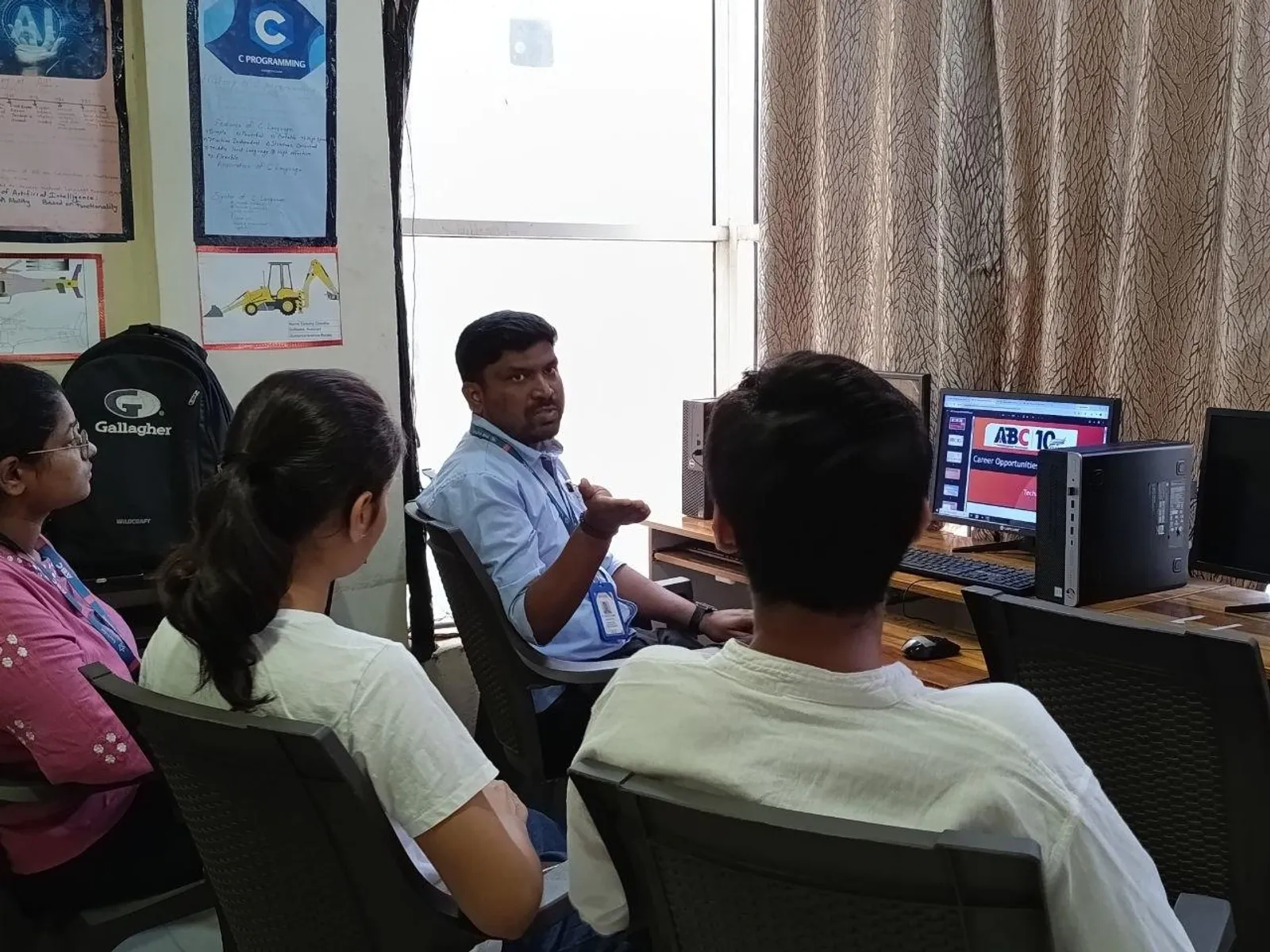
You are paired with a partner panel-builder in Pune (we have 14 partner companies). The panel-builder gives you a real specification for a project they are bidding on or executing. You produce the EPLAN deliverables under their senior engineer guidance. Your work is reviewed by their team. This is real experience, not classroom simulation.
Week 22: CV building specifically for ECAD/EPLAN roles
Generic engineering CVs do not get shortlisted. ECAD/EPLAN-targeted CVs do. We rewrite your CV with: portfolio projects with thumbnails, EPLAN P8 / AutoCAD Electrical / Siemens TIA Portal certifications with version numbers, macro library size with categories, industries you have built projects in, named recruiter targeting language. By end of week 22 your CV is ready.
Week 23: Mock interviews
5 mock interviews with industry HR (we partner with HR managers at Bajaj, Tata, Mercedes, VW, Siemens, ABB, L&T who do these as career-day commitments). Detailed feedback on technical depth, scenario handling, salary negotiation, career narrative. By end of week 23 you can handle any interview.
Week 24: Active placement sprint
Our placement team initiates referrals to the 35+ named recruiters based on your skill match, geography preference and salary expectation. Typical results: 4 to 9 interview invitations within the first 14 days, 1 to 3 offers within 30 days. The placement assistance window extends 90 days post-course.
The first offer
Average first-offer salary for ABC Trainings 2026 batch: Rs. 3.6 LPA. Highest first-offer in 2026 batch: Rs. 5.4 LPA at a tier-1 supplier feeding Mercedes Chakan. Negotiation tip: do not accept the first offer until you have at least one comparable second offer. The salary difference between accepting first vs negotiating with two offers is typically Rs. 25,000 to Rs. 60,000 annually.
The Second Job: How to Land a German Export Project Within 18 Months
Your first job at Rs. 3.6 LPA is not the destination. It is the platform for the second job, which is where the salary curve steepens. Here is how to position for a German export project within 18 months of starting your first job.
Months 1 to 6 of your first job
Focus on shipping projects. Volume of unique projects shipped is the single best CV upgrade in the first year. Aim for 8+ unique panel projects shipped. Document each one with photos and drawings. This becomes your second-job portfolio.
Months 6 to 12 of your first job
Start adding the second software: if you joined at an AutoCAD Electrical MSME, add advanced EPLAN. If you joined an EPLAN OEM, add Siemens TIA Portal depth. Volunteer for any project that touches German DIN standards or European customer interaction. Take an introductory German A1 language course (3 months, weekend, Rs. 8,000 to 12,000 at Pune University or Sambhajinagar Goethe-Zentrum). Even basic German is a hiring differentiator for export projects.
Months 12 to 18 of your first job
Network with engineers at companies doing German export work: Praj Industries Kopargaon (ethanol plants for EU), Reliable Auto Tech Chakan (VW Slovakia panels), Siemens Aurangabad (HV switchgear for Munich), Larsen and Toubro Hinjewadi (EU power projects). LinkedIn outreach, polytechnic alumni network, industry conferences. By month 18, you should have 1 to 3 active conversations about a German export role.
The German export role typically pays
Senior engineer level Rs. 9 to 13 LPA at the 2 to 3 year experience mark. Project engineer level Rs. 12 to 16 LPA at the 4 to 5 year mark. Often includes travel to Germany for project commissioning, which is a significant career compounder for Indian engineers.
Why German export is the optimal career track in 2026
India PLI scheme for capital goods is doubling EU export ambitions. German OEMs need cost-competitive Indian engineering partners. The supply of Indian engineers fluent in German DIN standards and EPLAN is small. Demand will outstrip supply for the next decade. Position early.
Common Mistakes That Slow Down the Roadmap And How to Avoid Them
I have watched students fail this roadmap. The failures are not random - they cluster into 6 patterns I have seen dozens of times.
Mistake 1: Treating it as a software course instead of a career path
The student who only attends classes and never builds portfolio projects gets the EPLAN certificate but not the job. Build the portfolio.
Mistake 2: Skipping the hardware tour
The student who never sees a panel being built lacks credibility in interviews when the topic turns to real-world manufacturing. Always do the hardware tour.
Mistake 3: Trying to learn 5 software platforms at once
The student who tries EPLAN + AutoCAD Electrical + Promis.e + SEE Electrical + AutoCAD Plant 3D in parallel ends up shallow on all of them. Master EPLAN deeply first.
Mistake 4: Refusing to commute or relocate
The student who insists on their hometown and rejects 35-km commute jobs misses out on the highest-value opportunities. The Sambhajinagar-Pune-Chakan belt is connected. Relocate or commute for the first 2 years.
Mistake 5: Accepting the first offer without negotiating
The Rs. 25,000 to Rs. 60,000 annual loss adds up to Rs. 1 to 3 lakh over 3 years. Always have a comparable second offer in hand before accepting.
Mistake 6: Stagnating at the first job for 4+ years
The first job teaches the basics. After 18 to 24 months, the salary curve is steeper for those who lateral. Do not stay at the first job for 4 years out of comfort.
The single biggest predictor of success
Discipline on portfolio projects. Every ABC Trainings student who completed both portfolio projects (the 12-page and the 35-page) got placed within the 90-day window. Of those who skipped one project to finish faster, only 40% got placed within the window. The portfolio is the engineering proof. Without it, you do not get the job.
Get the PLC SCADA & Automation Brochure + Fees + Batch Dates on WhatsApp
Free 1:1 counselling. Placement track record. CMYKPY/PMKVY eligibility check.
💬 Get Brochure on WhatsApp📞 Call 7039169629About the author: Avinash Chate. Founder and President of ABC Trainings. Has personally placed hundreds of diploma electrical students into ECAD, EPLAN and panel design roles across Maharashtra. Designs the ABC 6-month EPLAN curriculum based on actual hiring patterns at Bajaj, Tata, Mercedes-Benz, VW, Lupin, Cipla and Siemens India.
Visit Our Centers
- Wagholi (Pune): 1st Floor, Laxmi Datta Arcade, Pune-Ahilyanagar Highway. Call 7039169629
- Hadapsar (Pune HQ): 1st Floor, Shree Tower, opp. Vaibhav Theater, Magarpatta. Call 7039169629
- Cidco (Chh. Sambhajinagar): Kalpana Plaza, opp. Eiffel Tower, N-1 Cidco. Call 7039169629
- Osmanpura (Chh. Sambhajinagar): S.S.C Board to Peer Bazar Road, near Jama Masjid. Call 7039169629
- Sangli: Shubham Emphoria, 1st Floor, Above US Polo Assn., Sangli-Miraj Rd, Vishrambag. Weekend batches available. Call 7039169629
FAQs
How long does it really take a diploma electrical student to become a hire-ready EPLAN engineer?
A focused 6-month full-time path takes a diploma electrical graduate from zero software experience to hire-ready EPLAN engineer with 2 portfolio projects, 4 certifications, and active job offers in the Sambhajinagar-Pune-Chakan belt. The weekend track for working professionals takes 9 to 10 months. Average time from course end to first offer for an ABC Trainings 2026 EPLAN-trained student: 47 days. Fastest placement in 2026 batch: 11 days at Bajaj Waluj. Slowest within 90-day placement window: 81 days at Cipla Aurangabad.
What is the average first-job salary after the 6-month roadmap?
Average first-offer salary for ABC Trainings 2026 EPLAN batch: Rs. 3.6 LPA. Top first-offer: Rs. 5.4 LPA at a tier-1 supplier feeding Mercedes Chakan. Bottom first-offer in the placed cohort: Rs. 2.8 LPA at MSME panel builders in Bhosari. Negotiation tip: have at least one comparable second offer in hand before accepting. The 6-month roadmap is the ticket to a 35-year career path - the first salary is not the destination, it is the platform for the second job where the salary curve steepens.
Can I do this roadmap on weekends while working a current job?
Yes. ABC Trainings offers the same 6-month EPLAN roadmap in a 9 to 10 month weekend track for working professionals. Saturday and Sunday classes, with weekday self-study expectations of 8 to 10 hours per week. The portfolio projects are stretched across longer periods but the deliverables are identical. Many working professionals (panel-builder draftsmen, junior MSME engineers, ITI electricians wanting to upskill) take the weekend track and lateral after course completion at salary jumps of 35 to 60%.
Do I need a BE/BTech degree, or is diploma enough for EPLAN engineer roles?
Diploma electrical is enough. About 64% of ABC Trainings placed EPLAN engineers in 2025-26 are diploma graduates, not BE/BTech. The Indian electrical and automation industry has explicitly shifted to hiring for what you can DO, not what degree you hold. A diploma graduate with the 6-month roadmap deliverables (2 portfolio projects, EPLAN + AutoCAD Electrical + Siemens TIA Portal certifications, hardware exposure, macro library) regularly clears interviews at Bajaj, Tata, Endurance, Reliable Auto Tech, Siemens India and even Mercedes-Benz Chakan suppliers.
What is the single most important deliverable to land the first job?
The 35-page industrial automation panel project from Month 4. This is the CV headline project, the one interviewers spend 15 to 20 minutes asking about. Every ABC Trainings student who completed both portfolio projects (the 12-page Month 2 and the 35-page Month 4) got placed within the 90-day window. Students who skipped one project to finish faster had only 40% placement within the window. The portfolio is the engineering proof. Without it, you do not get the job.
How does ABC Trainings placement assistance actually work?
ABC Trainings has 11 years of placement partnerships with 35+ named recruiters across the Sambhajinagar-Pune-Chakan belt: Bajaj, Tata, Mercedes, VW, Mahindra, Force Motors, Endurance, Varroc, Lupin, Cipla, Wockhardt, Siemens, ABB, Schneider, Honeywell, Rockwell, Larsen and Toubro, KEC, Tata Projects, and others. After course completion, the placement team initiates referrals based on your skill match, geography preference and salary expectation. Typical results: 4 to 9 interview invitations within the first 14 days, 1 to 3 offers within 30 days. The 90-day placement assistance window covers extended placement for students who need more time.
How do I position for a German export project on my second job?
In your first 6 months at the first job, focus on shipping volume of unique projects - aim for 8+ panel projects shipped, documented with photos and drawings. Months 6 to 12: add the second software (EPLAN if you joined AutoCAD MSME, Siemens TIA depth if EPLAN OEM), volunteer for German DIN-standard projects, take a German A1 language course. Months 12 to 18: network at Praj Industries Kopargaon, Reliable Auto Tech Chakan, Siemens Aurangabad, Larsen and Toubro Hinjewadi - all do German/EU export work. By month 18, you should have 1 to 3 active conversations about a German export role, typically paying Rs. 9 to 16 LPA at the 2 to 5 year experience mark.
What if I am not in the Sambhajinagar-Pune-Chakan belt? Can I still do this roadmap?
Yes. The roadmap itself is portable - the deliverables (EPLAN portfolio projects, certifications, macro library) translate to any Indian industrial belt: Chennai, Bengaluru, Gurgaon-Manesar, Ahmedabad. ABC Trainings is concentrated in Maharashtra but the curriculum is identical to what works in other belts. Many students from Karnataka, Gujarat, Madhya Pradesh, Kerala and Telangana relocate to Pune for ABC Trainings and the depth of the Sambhajinagar-Pune-Chakan opportunity. The relocation pays back within the first 6 months of the first job.