Artificial Intelligence Beginner's Guide Ep.10 – Computer Vision and How Machines See (Updated June 2026)
A camera above a Bajaj Auto assembly line spots a scratched part and rejects it before it reaches packaging — without a single human looking. A security system at a Tata Motors plant identifies employees by their face and grants access. A self-driving car prototype trained at an IIT lab detects pedestrians at 30 frames per second. This is Computer Vision — and the NASSCOM-Deloitte report projects demand for 1.25 million AI professionals in India by 2027, with computer vision engineers among the most in-demand roles. Episode 10 of our AI Beginner's Guide explains how computer vision works: from how images are represented as numbers, to how Convolutional Neural Networks learn to recognise objects, to the Python tools — OpenCV, TensorFlow, PyTorch — you need to start building vision applications today.

- Computer Vision enables machines to interpret images and video — the basis of quality inspection, face recognition, and autonomous vehicles
- Images are represented as 2D or 3D arrays of pixel values (0-255) — computers see numbers, not pictures
- CNNs (Convolutional Neural Networks) learn to detect edges, shapes, and objects automatically from training images
- Key tools: OpenCV (C++ and Python), TensorFlow/Keras, PyTorch — all free and industry-standard
- Computer vision engineers in India earn ₹6–20 LPA depending on experience (AmbitionBox, 6figr)
What Is Computer Vision and Why Do Machines Need It
Computer Vision is the AI discipline that enables machines to extract meaning from visual inputs — images, video, and camera feeds. Humans process visual information effortlessly because our brains have evolved over millions of years specifically for this task. Teaching machines to do the same took decades of research. The breakthrough came with deep learning — specifically Convolutional Neural Networks — in 2012, when AlexNet won the ImageNet competition by a massive margin over all classical methods. Today computer vision is embedded in manufacturing quality control systems at Bosch and Mahindra, in face recognition systems at airports, in medical imaging AI that detects tumours from X-rays, and in the cameras of every modern smartphone. For engineers in Maharashtra, the manufacturing corridor from Pune to Sambhajinagar is increasingly deploying automated visual inspection systems — all of which need computer vision engineers to build, deploy, and maintain them.
How a Computer Sees an Image – Pixels, Arrays, and Colour Channels
A digital image is a grid of pixels. A greyscale image is a 2D array of numbers, each in the range 0 (black) to 255 (white). A colour image has three layers — Red, Green, Blue — making it a 3D array with shape (height, width, 3). A 640x480 colour image is therefore a 3D array with 640 times 480 times 3 equals 921,600 numbers. The computer sees only these numbers — it does not see a cat or a car. The entire challenge of computer vision is to build mathematical functions that take this array of numbers as input and output a correct classification label, a bounding box, or a pixel-level segmentation mask. Classical computer vision (before deep learning) used handcrafted features like edges, corners, and histograms. Deep learning replaces handcrafted features with learned features — the network discovers which patterns in the pixel array are most predictive for the task at hand.
| CV Task | What It Does | Example Model | Indian Use Case |
|---|---|---|---|
| Image Classification | Label entire image | ResNet, EfficientNet | Plant disease detection, product sorting |
| Object Detection | Locate and label objects | YOLO, Faster R-CNN | Factory defect inspection, vehicle counting |
| Segmentation | Label each pixel | U-Net, Mask R-CNN | Medical imaging, satellite mapping |
| OCR | Read text from images | Tesseract, PaddleOCR | Invoice processing, number plate reading |
| Pose Estimation | Detect body joints | MediaPipe, OpenPose | Sports analytics, factory ergonomics |
Convolutional Neural Networks – How AI Learns to Recognise Objects
A Convolutional Neural Network (CNN) is a type of neural network specifically designed for grid-like data like images. The key operation is convolution: a small filter (for example, a 3x3 or 5x5 array of learned weights) slides across the image and computes dot products at each position, producing a feature map. Early filters learn to detect low-level features — edges, corners, colour gradients. Deeper filters combine those to detect higher-level features — eyes, wheels, letters. The final layers use fully connected layers to classify the combined features. Classic CNN architectures like LeNet (1998), AlexNet (2012), VGGNet (2014), ResNet (2015), and EfficientNet (2019) each improved on the previous. Today, EfficientNet and vision transformers (ViT) are state-of-the-art. The good news: you do not need to build these from scratch — TensorFlow/Keras and PyTorch include pre-built implementations of all these architectures.
Object Detection, Image Segmentation, and Key Vision Tasks
Computer vision encompasses several distinct tasks. Image Classification: assign a single label to the whole image (is this a cat or a dog?). Object Detection: find all objects of specified classes in an image and draw bounding boxes around them (locate and label every car in a parking lot camera feed). Image Segmentation: assign a class label to every pixel in the image. Pose Estimation: detect the body joints of people in an image to understand body posture — used in sports analytics and physical therapy. Optical Character Recognition (OCR): read text from images — used for invoice processing at Tata Tech, Infosys, and Mahindra Finance. Each of these tasks has well-known open-source models you can deploy with 20-30 lines of Python code, making it genuinely accessible for any engineer who wants to get started.
Computer Vision Tools – OpenCV, TensorFlow, and PyTorch
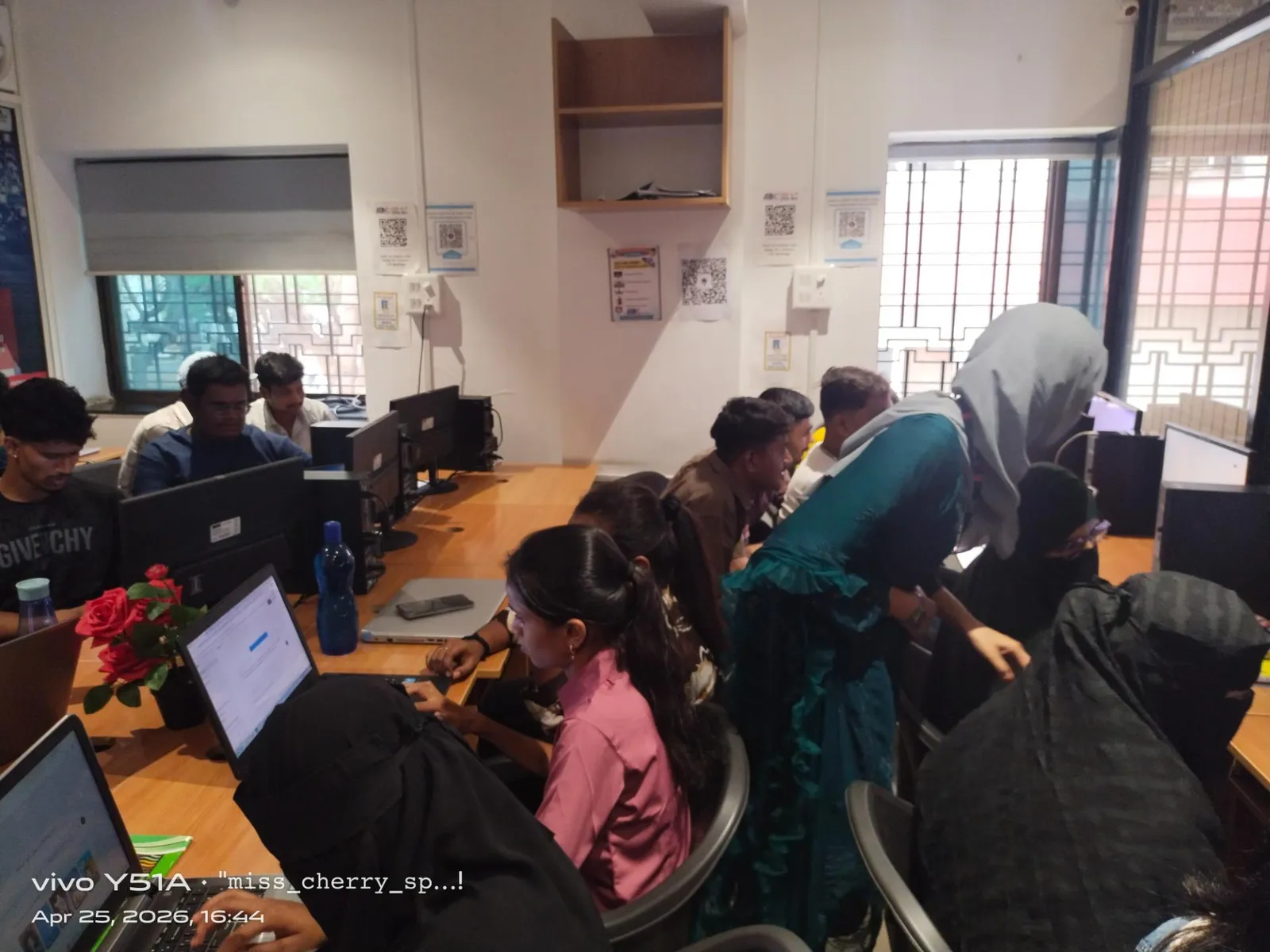
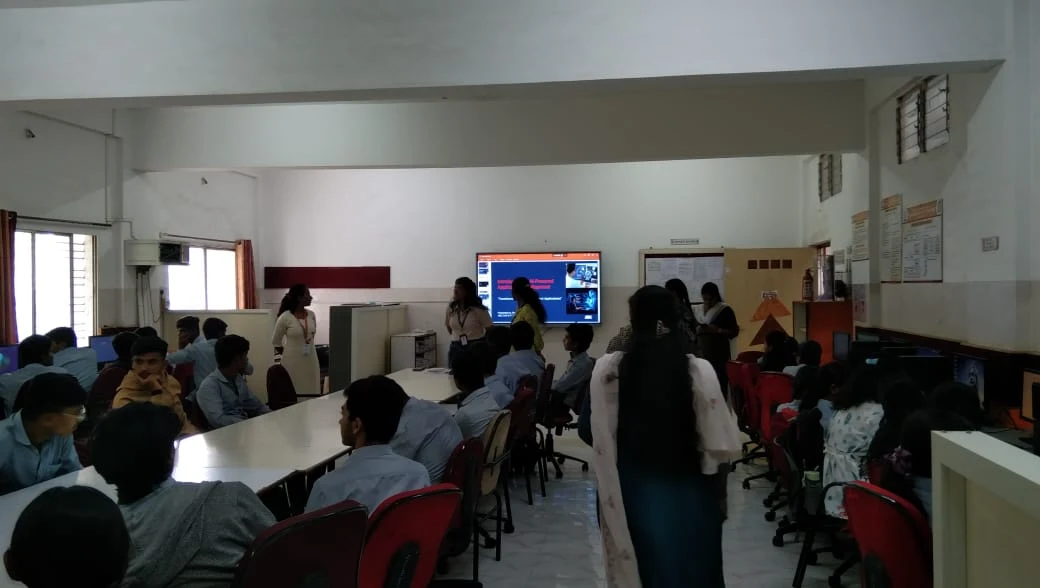
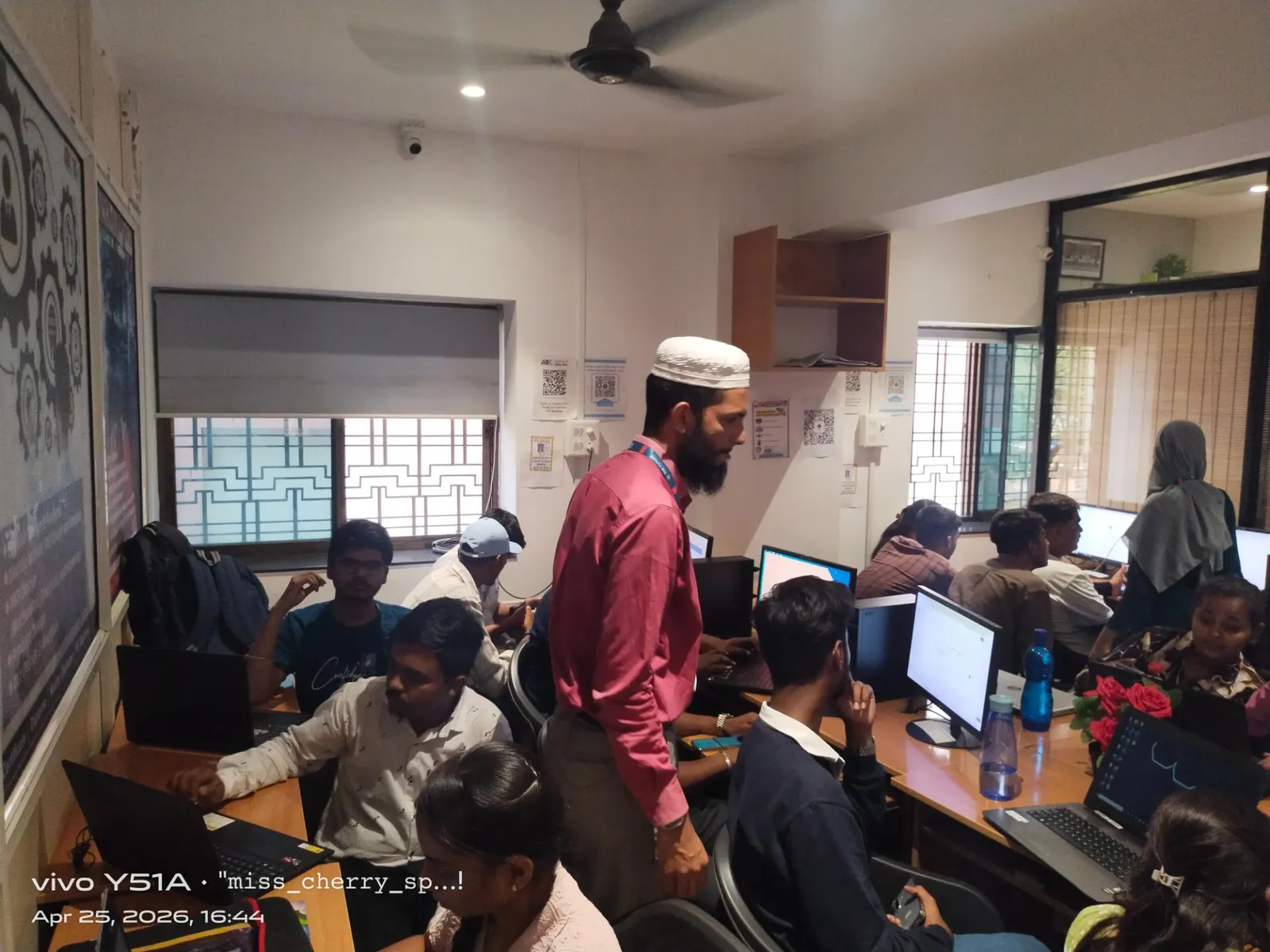
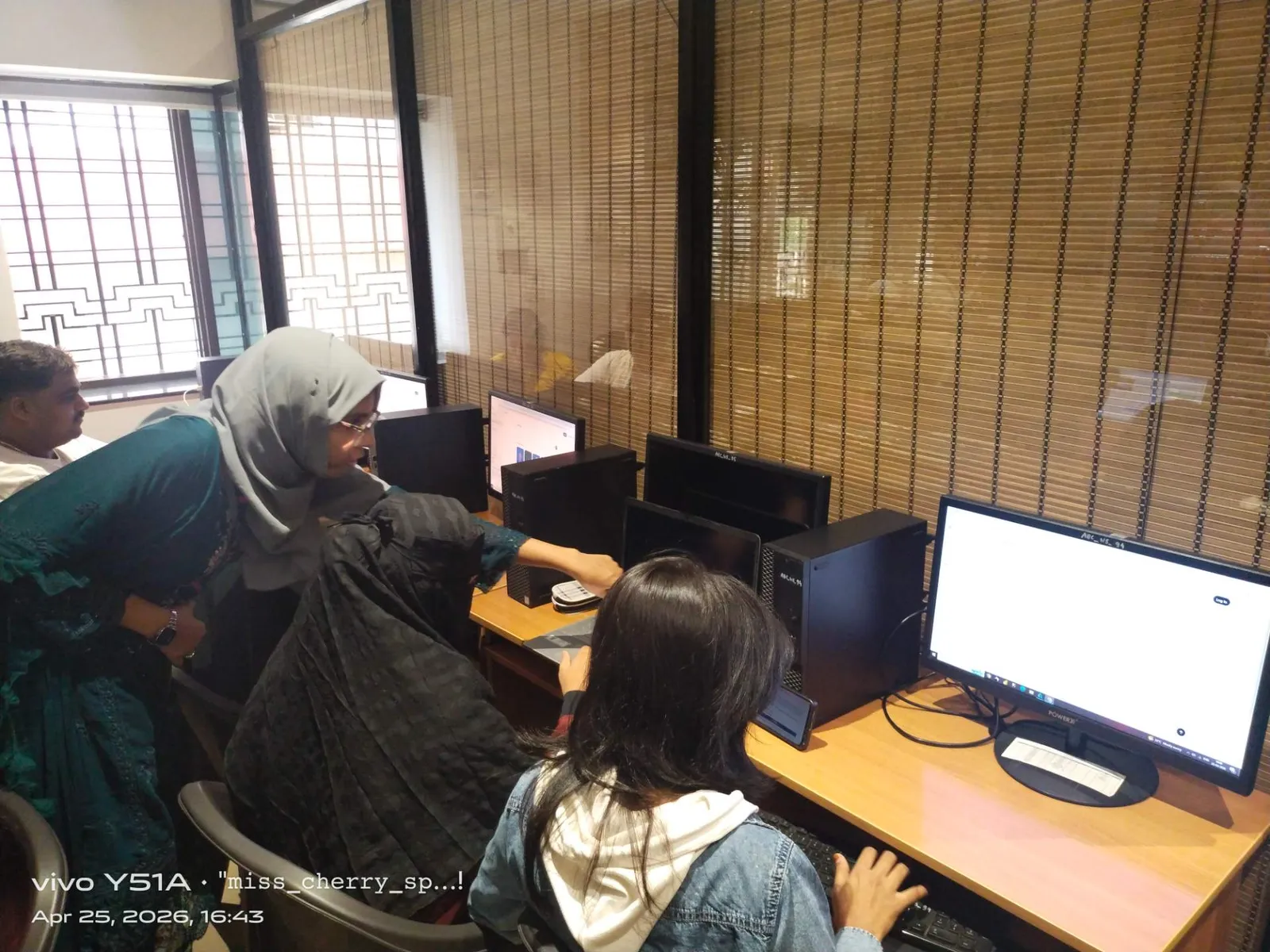
OpenCV (Open Source Computer Vision Library) is the most widely used computer vision library — available in Python and C++, free, and with 20+ years of industry adoption. It handles image I/O, colour space conversion, filtering, edge detection, morphological operations, feature detection (SIFT, ORB), and classical object detection. TensorFlow (Google) and PyTorch (Meta) are the two dominant deep learning frameworks. TensorFlow/Keras is favoured in production deployments; PyTorch is preferred in research. Both support training CNNs on GPU and exporting models for mobile or edge deployment. For rapid prototyping, Hugging Face also provides pre-trained computer vision models under the same simple interface as its NLP models. In ABC Trainings' AI Powered Application Development workshop, students build a working image classification application with OpenCV and TensorFlow — including camera integration, real-time inference, and a simple web interface to demonstrate the model.
Computer Vision Careers in India – Who Is Hiring and What They Pay
Computer vision roles are growing fast in India. At Mahindra (Pune), ADAS (Advanced Driver Assistance Systems) teams work on lane detection and pedestrian recognition. At Bosch India (Nashik plant) computer vision engineers work on manufacturing defect detection. Tata Technologies (Pune) builds vision-based quality inspection systems for automotive clients. KPIT Technologies (Pune) works on vision-based automotive AI. Startups like Mad Street Den, SigTuple, and Niramai are purely computer vision companies hiring aggressively. According to AmbitionBox and 6figr.com, a computer vision and AI engineer fresher earns ₹6–9 LPA in India. With 2-3 years of experience, ₹12–20 LPA is common at product companies and well-funded startups. The NASSCOM-Deloitte 2024 projection of 1.25 million AI roles by 2027 makes computer vision one of the safest long-term career bets you can make right now.
CMYKPY Scholarship: Maharashtra's CMYKPY scheme provides ₹6,000–₹10,000 for skill training for eligible youth. With NASSCOM-Deloitte projecting 1.25 million AI roles by 2027, computer vision skills are among the highest-value investments you can make in your career. Check your eligibility before enrolling. Call 7039169629 or WhatsApp 7774002496.
Get the AI Powered Application Development Brochure + Fees + Batch Dates on WhatsApp
Free 1:1 counselling. Placement track record. CMYKPY/PMKVY eligibility check.
💬 Get Brochure on WhatsApp📞 Call 7039169629About the author: Mohd. Rafique Pasha, Data Science & AI Trainer, ABC Trainings.
Visit Our Centers
- Wagholi (Pune): 1st Floor, Laxmi Datta Arcade, Pune-Ahilyanagar Highway. Call 7039169629
- Hadapsar (Pune HQ): 1st Floor, Shree Tower, opp. Vaibhav Theater, Magarpatta. Call 7039169629
- Cidco (Chh. Sambhajinagar): Kalpana Plaza, opp. Eiffel Tower, N-1 Cidco. Call 7039169629
- Osmanpura (Chh. Sambhajinagar): S.S.C Board to Peer Bazar Road, near Jama Masjid. Call 7039169629
- Sangli: Shubham Emphoria, 1st Floor, Above US Polo Assn., Sangli-Miraj Rd, Vishrambag. Weekend batches available. Call 7039169629
FAQs
What is Computer Vision in Artificial Intelligence?
Computer Vision is the AI subfield that enables machines to interpret and understand visual information from images, video, and camera feeds. Applications include image classification (identifying what is in an image), object detection (locating and labelling objects with bounding boxes), image segmentation (classifying each pixel), optical character recognition (reading text from images), face recognition, and autonomous vehicle perception. Computer vision systems are used in manufacturing quality inspection, medical imaging, security, agriculture, and retail across India and globally.
What is a CNN (Convolutional Neural Network) and how does it work?
A Convolutional Neural Network (CNN) is a deep learning architecture designed specifically for image data. It uses convolutional layers where small filter matrices (kernels) slide across the image to detect local patterns — edges, shapes, textures. Early CNN layers detect low-level features (edges, corners); deeper layers combine these into high-level features (eyes, wheels, text characters). Max-pooling layers reduce spatial dimensions for efficiency. The final fully connected layers output class probabilities. Training requires thousands of labelled images and significant compute (usually GPU), but pre-trained models like ResNet, VGG, and EfficientNet are freely available for transfer learning with your own dataset.
What tools and libraries are used for Computer Vision in Python?
The most widely used Python computer vision tools are: OpenCV — for image processing, camera access, filtering, and classical feature detection. TensorFlow/Keras — for training and deploying deep learning models including CNNs. PyTorch — the preferred research framework, also widely used in production. Hugging Face Transformers — provides Vision Transformer (ViT) models with the same simple API as NLP models. Scikit-image — for classical image processing operations. All are free and open-source. GPU access via Google Colab free tier or Kaggle Notebooks is sufficient for most beginner and intermediate computer vision projects.
What is the salary of a Computer Vision engineer in India?
According to AmbitionBox and 6figr.com, a Computer Vision or AI engineer fresher in India earns ₹6–9 LPA at companies like Mahindra, Bosch, KPIT, or a well-funded AI startup. With 2-3 years of project experience, salary reaches ₹12–20 LPA. Senior CV engineers and ML architects earn ₹22–40 LPA at product companies and MNCs. The NASSCOM-Deloitte 2024 report projects 1.25 million AI jobs in India by 2027, with computer vision consistently listed as a priority skill gap area.